


تحذيرات من الاعتماد الكلي على الذكاء الاصطناعي في التشخيص الطبي
طبيبة تحذّر من أنه لا يجوز الاعتماء على الذكاء الاصطناعي في تشخيص الأمراض، وأنه يجب أن يبقى الخيار النهائي للطبيب في هذا المجال.
-
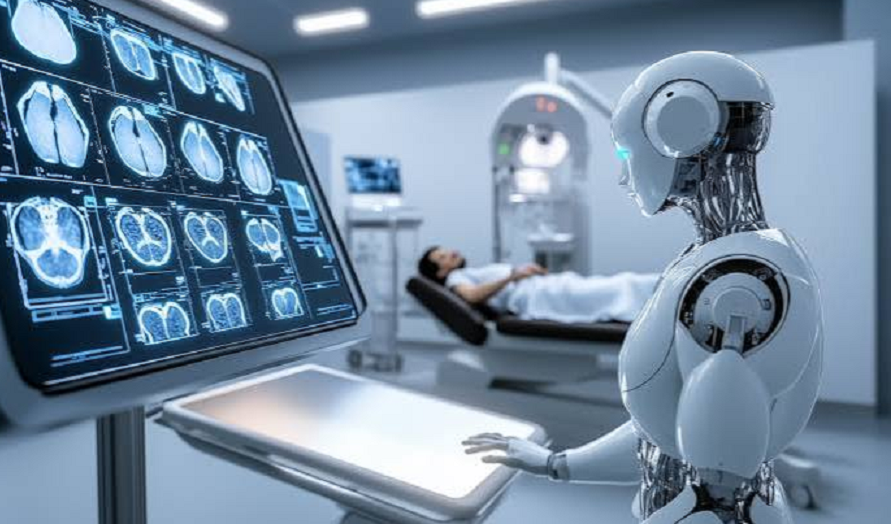
تحذيرات من الاعتماد الكلي على الذكاء الاصطناعي في التشخيص الطبي
حذّرت الطبيبة الروسية والأخصائية في علم الأمراض، أرينا ليمان، من الاعتماد بشكل كلي على الذكاء الاصطناعي في مجال تشخيص الأمراض.
وقالت ليمان:"من السابق لأوانه الثقة بشكل كامل بالتشخيص المرضي الذي يعتمد على الذكاء الاصطناعي، إذ يجب على الطبيب التحقق من الفرضيات واستنتاجات الذكاء الاصطناعي قبل إعطاء التشخيص النهائي للمريض".
Digital decision-support tools show that #AI’s effectiveness depends on data quality, infrastructure and workflow integration. Autonomous prescribing raises the stakes by weakening human oversight. AI inherits the strengths and weaknesses of the health systems in which it operates: @kmadangopal https://t.co/76jaaTp1l2 #HealthAI
— ORF (@orfonline) November 3, 2026
وأضافت: "أجرى الباحثون تجربتين على مواد تضم 200 مسح نسيجي لعينات خزعة ومواد جراحية، وقارنوا استجابات نموذجين للذكاء الاصطناعي بتقارير أخصائي علم الأمراض، وفي إحدى التجارب، تمّ تقييم العينات بثلاث طرق: بالصور فقط، مع تحديد العضو، ومع البيانات السريرية من الإحالة".
interesting -it would speed up diagnosis but will it speed up treatment options? uses like this I se Ai as useful- Not bloody games! losing trained skilled lab staff IS a big issue though , machines break, reliance on a mech setup could have serious downsides too https://t.co/dz7mDsMnXo
— Amicus Curiae (@AmicusCuri99068) November 6, 2026
وتابعت أنه "تمّ رقمنة العينات على ثلاثة ماسحات ضوئية مختلفة، لكن من دون معلومات عن المريض، تطابقت الإجابة كلياً أو جزئياً مع استنتاج الطبيب في 8% من الحالات فقط، وعندما أبلغت نماذج الذكاء بالعضو الذي أُخذت منه العينة، ارتفع المؤشر إلى 30%، وعند إضافة البيانات السريرية ارتفع إلى 43%".
Is a human in the loop enough to keep generative AI safe? The @AmerMedicalAssn says not necessarily. In comments to the @US_FDA, it warned that clinicians can make errors reviewing AI suggestions or become over-reliant on the tools. Via @HealthcareDive: https://t.co/DUii7IRPtb
— Medicomp Systems (@MedicompSys) November 6, 2026
كما شرحت قائلةً:"أظهرت تجربتنا أنّ هذه البيانات الإضافية، مصدر النسيج وسبب إجراء الدراسة، يمكن أن تحسّن إجابات النموذج بشكل ملحوظ، لكن حتى مع المعلومات الإضافية، أخطأت الشبكة العصبية في عدد من الحالات، وهذا يثبت مرة أخرى مدى أهمية التحقق من استنتاج الذكاء الاصطناعي ومقارنته بالصورة السريرية وبيانات الدراسة نفسها".
Scientists Gave a Human an AI-Designed Virus. What Could Possibly Go Wrong? | Mihai Andrei, ZME Science Scientists from a San Francisco startup have used artificial intelligence to design viruses that were subsequently administered to a human patient. Yes, really. But before you picture an AI-generated pandemic nightmare, there’s something important to address: these viruses weren’t designed to attack humans. They were designed to kill bacteria, potentially including some of the most dangerous antibiotic-resistant infections. And while the technology has already reached a patient, there’s a rather important detail missing from the announcement. We don’t know whether it actually worked. Tackling the world’s antibiotic problem The viruses in question are called bacteriophages, and they’re among the most abundant biological entities on Earth. They’ve been killing bacteria for billions of years, from long before humans existed. These viruses don’t infect human cells, although their interactions with bacteria and our immune systems can still have consequences. Why would anyone give them to a patient? Because they’re trying to solve one of the biggest problems humanity is facing at the moment: antibiotic resistance. On October 20, California biotechnology startup Radical Numerics announced that viruses engineered using its AI system, Omnii-1, had been administered to a patient suffering from a drug-resistant bacterial infection. According to the company, the experimental viruses successfully eliminated bacteria isolated from the patient’s infection in laboratory tests. The treatment was administered under an authorized, physician-led compassionate-use pathway, which allows doctors to offer experimental therapies to seriously ill patients when satisfactory alternatives are unavailable. It’s a potentially important milestone. But here’s the thing: the company hasn’t disclosed whether the treatment actually helped the patient. And the evidence supporting its claims hasn’t yet undergone peer review. A virus that kills bacteria, not people Viruses have a deservedly terrible reputation. They cause everything from the common cold to some of humanity’s deadliest diseases. But viruses are extraordinarily diverse. Most don’t infect humans at all. Bacteriophages, or simply phages, have evolved to infect bacteria. Many look like miniature lunar landers, complete with geometric heads, thin tails, and spindly structures that help them attach to their targets. Their method of attack can be brutally effective. A phage recognizes a particular molecule on the surface of a bacterium, attaches itself, and delivers its genetic material inside. Some phages then hijack the bacterium’s cellular machinery to manufacture more viruses. Eventually, the bacterial cell bursts, releasing a new generation of phages. For the bacterium, it’s a catastrophe. But if you’re a human suffering from a bacterial infection, it could be a lifesaver. Surprisingly, it’s not a new idea Using viruses as medicine sounds futuristic. But the basic idea is more than a century old. Scientists began exploring phage therapy before antibiotics became widely available. But as drugs like penicillin became abundant, interest in phage treatments declined in much of the Western world. Phage therapy nevertheless continued to develop in places such as Georgia and Poland. Today, as antibiotic resistance continues to be an ever-larger problem, interest in phage treatments is seeing a revival. According to global estimates published in The Lancet, bacterial antimicrobial resistance directly caused approximately 1.14 million deaths worldwide in 2021 and was associated with an estimated 4.71 million deaths in total. Phages offer a different way to attack bacteria, potentially including strains resistant to multiple antibiotics. But there’s a problem. Finding the right virus can be surprisingly difficult The same specificity that makes bacteriophages attractive also makes them frustratingly difficult to use. A virus that efficiently destroys one bacterial strain might be completely useless against another strain of the same species. It’s like a lock-and-key problem. A phage needs the right molecular key to recognize and infect its bacterial target. If the bacterium’s surface structures differ, the virus may not even get through the door. And getting through the door isn’t enough. The phage must also overcome the bacterium’s defenses and successfully reproduce inside it. Traditionally, scientists have searched collections of naturally occurring phages, testing candidates against bacteria isolated from a patient’s infection. Sometimes it works, but sometimes it doesn’t; and the approach can be frustrating and time-consuming. Even when a promising phage exists, identifying it, testing it, preparing it and getting it to the patient can take valuable time. That’s when AI (and this new treatment) comes in. An AI for viruses Rather than relying entirely on finding the right virus in nature, scientists want to design one. Radical Numerics developed Omnii-1, a genome language model trained on biological sequence data, to generate promising phage designs and predict which viruses might infect particular bacterial strains. The principle is somewhat similar to how large language models learn patterns in written language, except that the patterns here are encoded in DNA and other biological data. But this isn’t quite the same as asking ChatGPT to invent an entirely new virus. In one set of experiments, the company modified a protein called gp17 in the T7 bacteriophage. This protein helps the virus recognize receptors on E. coli bacteria. Researchers can start with a known phage and use AI to redesign particular regions of its genome. The goal is to change how the virus recognizes bacteria without breaking the biological machinery that makes it function. According to the company’s technical report, 69.9% of AI-designed variants carrying 11 to 15 amino acid changes were successfully recovered in laboratory experiments, compared with just 4.8% of randomly designed controls. But there’s an important qualification: successful recovery means researchers detected the engineered phage after attempting to produce it. It doesn’t necessarily mean that the virus is effective against a dangerous infection. These results suggest AI can help researchers navigate a huge landscape of possible genetic changes. But they don’t establish that the method produces better medical treatments. So, what could actually go wrong? It’s tempting to think that because phages can’t infect human cells that makes them completely safe. But that’s not really true. For starters, destroying bacteria can itself cause problems. Some bacteria contain endotoxins that can trigger inflammation when released. If a treatment rapidly destroys large numbers of these bacteria, patients could experience fever or potentially dangerous inflammatory reactions. Some beneficial bacteria might also be affected, although the narrow targeting of many phages could make them less disruptive than broad-spectrum antibiotics. There are also risks associated with the preparation itself. Therapeutic phage products must be carefully purified and tested to minimize contamination with bacterial material and other unwanted substances. Then, there’s the problem of what the virus does to bacteria beyond killing them. Some phages can transfer genetic material between bacteria, a process known as transduction. Depending on the phage and the genes involved, that can have undesirable consequences, including the movement of genes associated with antibiotic resistance or virulence. This is one reason researchers generally favor carefully characterized, strictly lytic phages for therapy and screen candidates for undesirable genetic features. In the longer run, bacteria can also evolve resistance to phages, just as they evolve resistance to antibiotics. A treatment that works brilliantly in the laboratory might become less effective as the bacterial population changes. And artificial intelligence adds another layer of uncertainty. Engineering a virus to improve one property doesn’t automatically guarantee that every other property remains unchanged. None of this means AI-designed phages are inherently dangerous. It means they need the same rigorous testing, quality control, and clinical oversight expected of other experimental biological therapies. A major consensus guideline published in Nature Medicine in September 2026 concluded that available evidence generally supports the safety of carefully prepared phage therapies, while emphasizing the need for quality controls, careful patient monitoring and stronger clinical studies. Did the treatment work? For all the excitement surrounding AI-designed therapies, the most important piece of information is still missing. Radical Numerics says its experimental phage cocktail eliminated bacteria isolated from the patient’s infection in laboratory testing. But the company has not disclosed the patient’s clinical outcome, citing privacy concerns. We don’t know whether the infection improved, whether the patient experienced adverse effects, or how the treatment compares with existing options. We also don’t know enough about the patient’s underlying infection, the other treatments they received, or the exact phages administered to properly assess the clinical significance of the case. AI may have helped scientists design a promising biological weapon against drug-resistant bacteria. But only clinical evidence can establish whether that weapon improves patients’ lives. Still, there’s something remarkable about the broader trajectory. For billions of years, bacteria and the viruses that prey on them have been locked in an evolutionary arms race. Now humans are beginning to intervene, using artificial intelligence to explore genetic designs that natural selection may never have produced. The idea of injecting someone with an AI-designed virus sounds like the beginning of a science-fiction horror story. It might instead become part of the future of medicine. But there’s a difference between designing a virus that kills bacteria in a laboratory and developing a treatment that saves a human life. For now, the ending remains unwritten. https://t.co/UEZc70W2cx
— Owen Gregorian (@OwenGregorian) November 5, 2026
وحذّرت ليمان من أنّ طريقة الرقمنة أثّرت أيضاً على النتيجة: فبالنسبة لعينة واحدة ممسوحة ضوئياً على أجهزة مختلفة، قد يقدم النموذج إجابات مختلفة.
وبحسب الاخصائية فإنّ الذكاء الاصطناعي يمتلك حالياً إمكانيات تجعل منه مساعداً يقترح خيارات في مجال التشخيص الطبي والتحقق من النتائج، لكن يجب أن يبقى الخيار النهائي للطبيب في هذا المجال.
Warnings against relying entirely on artificial intelligence in medical diagnosis https://t.co/pN5MAtYK7H
— MShariqFaraz (@MShariqFaraz) November 9, 2026


